
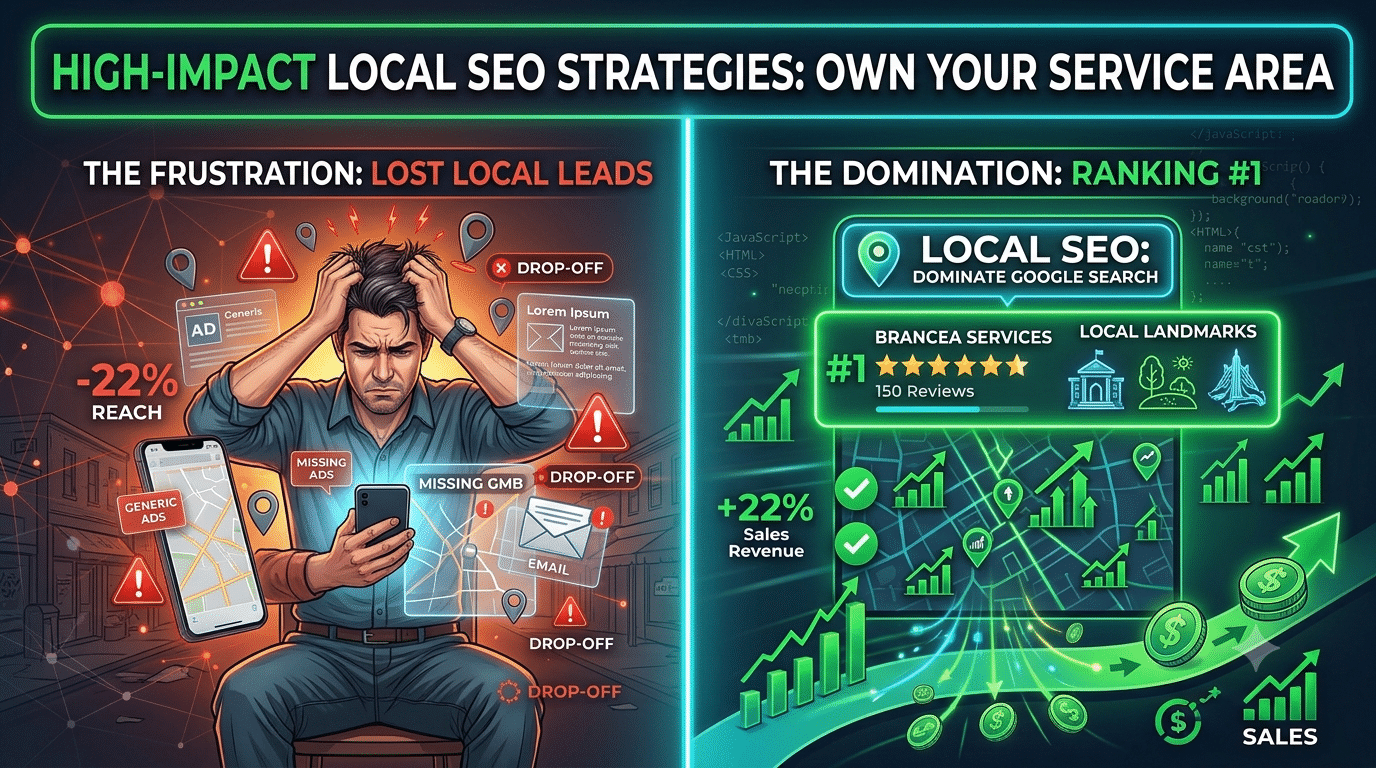
In today’s digital-first economy, the marketplace is no longer confined by physical boundaries. A consumer sitting in a regional town has access to global e-commerce giants, multinational service providers, and endless online alternatives with a single swipe of their smartphone. For regional and location-bound businesses—such as brick-and-mortar storefronts, regional service providers, local medical practices, contractors, and hospitality venues—competing against massive national brands can feel like an uphill battle.
However, modern consumer behavior reveals a powerful counter-trend: local intent is skyrocketing.
When a homeowner’s pipe bursts, when a local professional needs a trusted accountant, or when a hungry traveler looks for the best dining spot nearby, they aren’t searching for global corporations. They are searching for solutions right in their immediate neighborhood. Phrases like “near me,” “best local service,” and hyper-targeted city-specific searches dominate mobile query volume.
If your regional business is not capturing these high-intent local searches, you are handing paying customers directly to your competitors. Mastering local SEO optimization is no longer a secondary marketing tactic; it is the ultimate survival and growth engine for regional enterprises.
At Brancea, we believe that true digital authority begins in your own backyard. In this comprehensive, SEO-friendly guide, we will unpack the mechanics of local SEO, explore why regional businesses cannot afford to ignore it, and reveal the advanced strategies you need to dominate Google search in your service area.
The Paradigm Shift: Why Traditional SEO Isn’t Enough for Regional Businesses
For years, search engine optimization was viewed through a broad lens. Businesses focused heavily on national keywords, high-level industry terms, and generalized content designed to rank globally. While national SEO remains important for SaaS companies and e-commerce brands shipping worldwide, it is fundamentally inefficient—and often completely ineffective—for regional businesses.
The Limitations of Broad SEO
Imagine you operate a premier HVAC repair company based exclusively in a specific regional county. If you rank #1 globally for the broad keyword “best HVAC repair tips,” you might attract thousands of website visitors from across the country or around the world. But if those visitors live 1,000 miles away, that traffic translates to zero revenue.
Regional businesses do not need global vanity traffic; they need high-intent local foot traffic and qualified leads.
The Power of Local Intent
Google’s search algorithms have evolved to prioritize proximity, relevance, and prominence. When a user executes a search with local intent—whether explicit (e.g., “plumber in Austin”) or implicit (e.g., “plumber near me” based on GPS coordinates)—Google bypasses many national websites and serves the Local Map Pack alongside hyper-targeted organic search results.
Local SEO bridges the gap between digital discovery and physical reality, ensuring that when potential customers in your service area are ready to buy, your business is the first one they see.
The Anatomy of Local SEO: Understanding the Core Pillars
To dominate regional search results, you must understand how Google evaluates local businesses. Local search optimization is built on three foundational pillars: Proximity, Relevance, and Prominence.
                         ┌─────────────────────────────┐
                         │      LOCAL SEO PILLARS      │
                         └──────────────┬──────────────┘
                                        │
        ┌───────────────────────────────┼───────────────────────────────┐
        ▼                               ▼                               ▼
┌───────────────┐               ┌───────────────┐               ┌───────────────┐
│   PROXIMITY   │               │   RELEVANCE   │               │  PROMINENCE   │
│ How close is  │               │ How well does │               │ How well known│
│ the business  │               │ your profile  │               │ & trusted is  │
│  to searcher? │               │ match query?  │               │ your brand?   │
└───────────────┘               └───────────────┘               └───────────────┘
1. Proximity
Proximity is the physical distance between the searcher (or the location specified in the search query) and your business address. While you cannot change your physical location, you can optimize your digital footprint to capture searches across your entire extended service area.
2. Relevance
Relevance measures how closely your Google Business Profile (GBP) and website content match what the user is searching for. If you run a dental clinic, your profile and site must clearly signal to search engines that you provide dental services, cleanings, orthodontics, and emergency dental care—not general medical services.
3. Prominence
Prominence refers to how well-known and trusted your business is in the real and digital world. Google evaluates prominence based on information it gathers across the web—including customer reviews, link citations, directory listings, local media mentions, and social authority.
1. Mastering Google Business Profile (GBP): Your Local Digital Headquarters
If your Google Business Profile (formerly Google My Business) is unoptimized, incomplete, or neglected, your chances of dominating regional search are virtually zero. The GBP listing powers the Local 3-Pack—the prime real estate at the top of Google search results that captures the vast majority of local clicks.
Key Optimization Strategies for GBP:
-
Precise NAP Consistency: Ensure your business Name, Address, and Phone number (NAP) are 100% consistent across your website, GBP listing, and every external directory. Even minor discrepancies (e.g., “Street” vs. “St.”) can confuse search engine crawlers.
-
Strategic Primary and Secondary Categories: Selecting the correct business category is one of the most impactful ranking factors. Choose a precise primary category and supplement it with relevant secondary categories.
-
Geographically Optimized Descriptions: Craft a compelling, keyword-rich business description that naturally incorporates your regional service areas and core value propositions.
-
Geo-Tagged Visual Content: Regularly upload high-quality, authentic photos of your storefront, team, vehicles, and completed projects. Modern AI and image recognition tools process metadata, and geo-tagged images reinforce your local relevance.
-
Active Google Posts: Treat your GBP like a social feed. Share weekly updates, seasonal promotions, company milestones, and event announcements directly on your profile to signal continuous activity.
2. Review Generation and Reputation Management: The Trust Engine
Consumer trust is the ultimate currency in regional markets. In local economies driven by word-of-mouth recommendations, online reviews act as digital testimonials that heavily influence both human behavior and search engine algorithms.
How Reviews Impact Local SEO
-
Algorithmic Weight: The quantity, velocity, sentiment, and keyword richness of your customer reviews are major ranking factors in the Local 3-Pack. Businesses with a steady stream of 5-star reviews consistently outrank competitors with stagnant profiles.
-
Click-Through Rate (CTR) Amplification: When a user sees a business with 150 glowing reviews next to a competitor with three reviews, they are overwhelmingly likely to click the trusted option. Higher CTRs signal to Google that your result satisfies user intent, further boosting your rankings.
Building an Automated Review Ecosystem
Domination requires a proactive system. Regional businesses should implement automated post-service email and SMS sequences that make leaving a review effortless for satisfied customers. Furthermore, your team must professionally respond to every single review—both positive and negative—demonstrating customer care and active engagement.
3. Hyper-Local On-Page SEO and Location Landing Pages
While your Google Business Profile captures high-intent map searches, your website content must capture organic regional search queries. If you serve multiple towns, suburbs, or regions within a broader geographic area, relying solely on a generic homepage is a critical mistake.
The Power of Dedicated Location Landing Pages
If your business operates across five different regional towns, you should build a dedicated, unique landing page for each specific location.
-
Tailored Content: Avoid lazy duplicate content where you simply swap out the city name. Each page should feature localized content, including local landmarks, regional service details, region-specific customer testimonials, and local team members.
-
Local Schema Markup: Implement Local Business Schema (JSON-LD markup) on your website. This structured data explicitly tells search engines your exact geographic coordinates, operating hours, service areas, and contact details, making it effortless for Google to index your regional footprint.
-
Localized Meta Tags: Craft title tags and meta descriptions that feature high-intent regional keywords (e.g., “Best Commercial Roofing Contractors in [City Name] | Brancea”).
4. Local Citations and Regional Link Building
Search engines validate your business authority by looking at how often—and how authoritatively—you are mentioned across the web. For regional businesses, local citations and backlinks are crucial for building prominence.
What Are Local Citations?
A citation is any online mention of your business name, address, and phone number.
-
Structured Citations: Profiles on major directories such as Yelp, YellowPages, TripAdvisor, Apple Maps, and industry-specific trade directories.
-
Unstructured Citations: Mentions of your business in local newspapers, regional chamber of commerce blogs, community event sponsorships, or local news portals.
Regional Link Building Strategies
Earning backlinks from high-authority national sites can be difficult for a regional business, but earning links from local authorities is entirely achievable and often more valuable:
-
Sponsor Local Events: Sponsor regional sports teams, charity fundraisers, or community festivals to earn authoritative .edu, .org, or local news backlinks.
-
PR and Local Media: Pitch newsworthy company milestones, community initiatives, or expert commentary to regional journalists and local newspaper editors.
-
Partner Collaboration: Partner with complementary non-competing regional businesses (e.g., a home builder partnering with a local interior designer) to cross-promote and link to each other.
5. Mobile Optimization and Core Web Vitals for Local Search
Local search is overwhelmingly mobile-driven. Consumers searching for a nearby plumber, restaurant, or attorney are almost always using a smartphone while on the move. If your regional website is slow, clumsy, or difficult to navigate on mobile devices, users will bounce immediately.
As explored in performance optimization frameworks, mobile user experience directly impacts conversion rates and search rankings:
-
Lightning-Fast Load Times: Local mobile users have zero patience for sluggish pages. Optimizing Core Web Vitals (Largest Contentful Paint, Interaction to Next Paint, and Cumulative Layout Shift) ensures your site renders instantly on cellular networks.
-
Click-to-Call Functionality: Ensure your phone number is prominently displayed as a clickable button on mobile views, allowing users to call your business with a single tap.
-
Frictionless Mobile Forms: Keep lead capture forms short, intuitive, and easy to complete on smaller screens.
How Brancea Builds Regional Dominance Through Local SEO
Achieving sustainable market leadership in a regional economy requires more than a checklist of generic tactics. At Brancea, we view local SEO as a comprehensive growth ecosystem that harmonizes technical web excellence, reputation management, and hyper-local content strategy.
When you partner with Brancea for local SEO optimization, our methodology encompasses:
-
Comprehensive Local Audit & Competitor Analysis: We analyze your regional market, audit your current Google Business Profile, evaluate competitor strengths, and identify untapped keyword opportunities in your exact service radius.
-
GBP Architecture & Optimization: We completely overhaul and optimize your Google Business Profile, ensuring precise categorization, NAP consistency, geo-tagged asset integration, and ongoing profile management.
-
Hyper-Local Content & Schema Engineering: We design custom location landing pages and implement advanced Local Business Schema markup to cement your authority across every town and neighborhood you serve.
-
Reputation & Citation Authority: We build robust local citation ecosystems and implement scalable review-generation frameworks to elevate your brand trust and prominence.
-
Continuous Performance Tracking: We track hyper-local ranking movements, map pack visibility, call conversions, and organic revenue growth, acting as your long-term digital growth partner.
Conclusion: Own Your Backyard and Scale Your Revenue
In regional business, proximity is an asset, but visibility is what turns proximity into profit. If your prospective customers cannot find you when they search for your services locally, they are walking straight into the arms of your competitors.
By mastering local SEO optimization—optimizing your Google Business Profile, building a robust review ecosystem, crafting hyper-local landing pages, and securing regional citations—you establish unshakeable digital authority in your service area.
Are you ready to dominate Google search in your region and turn local searches into predictable revenue? Connect with Brancea today to discover how our custom local SEO and web development solutions can elevate your regional business.