
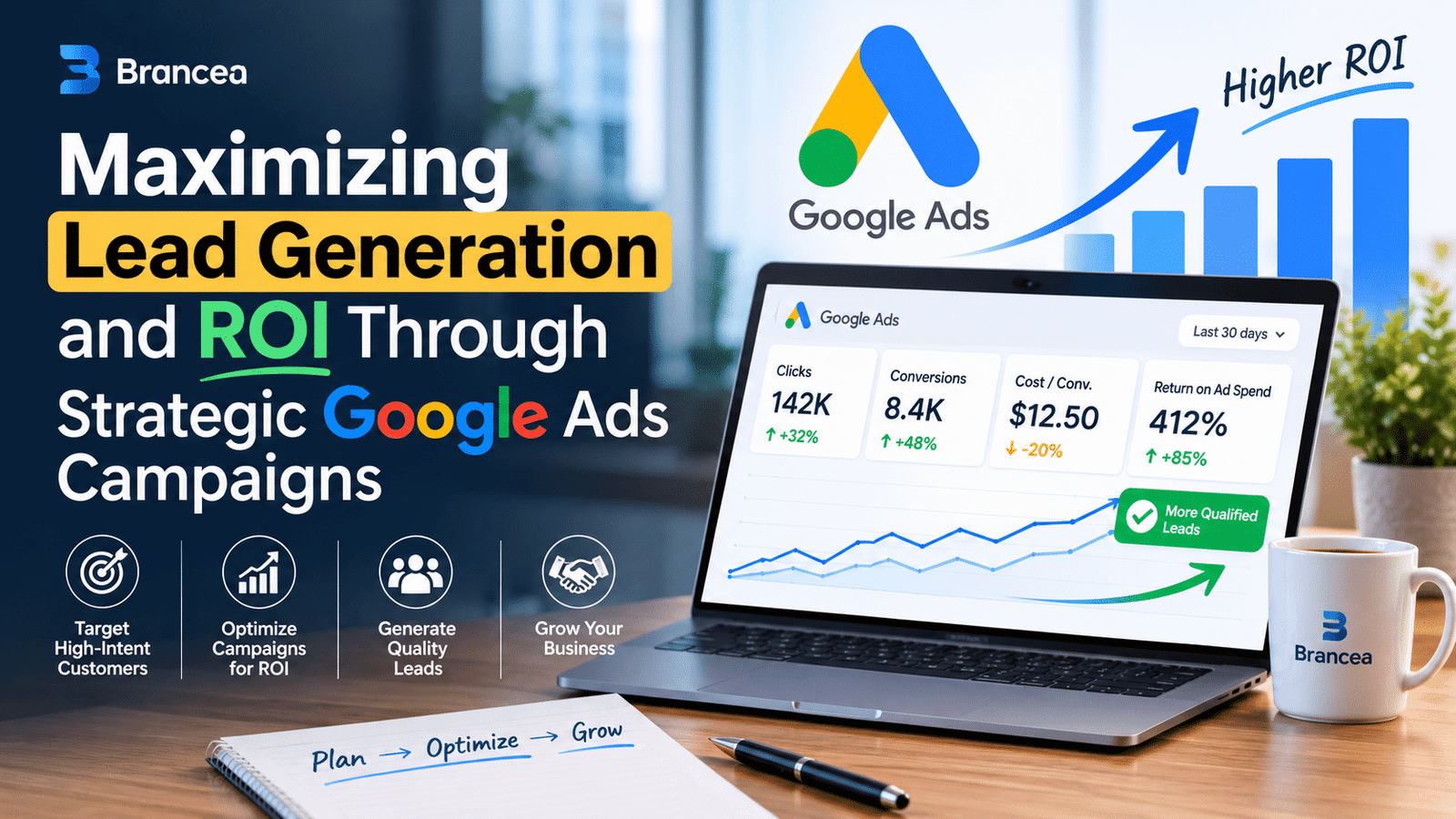
In today’s hyper-competitive digital landscape, capturing high-intent customer attention at the exact moment they are looking for a solution is the holy grail of marketing. Businesses invest heavily in social media, content marketing, and organic search engine optimization (SEO) to build long-term visibility. However, when it comes to generating immediate, high-converting leads and scaling revenue with mathematical predictability, few digital channels can match the raw power of Google Ads.
Every second, millions of users turn to Google to solve urgent problems, research complex business services, or purchase products. Yet, despite the platform’s massive reach, many business leaders and marketing executives view pay-per-click (PPC) advertising with skepticism. Too often, organizations set up generic campaigns, target broad keywords, burn through thousands of dollars in ad spend, and end up with empty pipelines and low-quality inquiries.
The reality is that Google Ads is not a plug-and-play system—it is a sophisticated, auction-driven marketplace that rewards strategic precision, technical architecture, and continuous optimization.
Partnering with a specialized Google Ads management agency bridges the gap between wasted ad spend and profitable revenue growth. At Brancea, we believe that true digital authority is built on measurable outcomes, performance-first engineering, and transparent return on investment (ROI). In this comprehensive, SEO-friendly guide, we will break down how strategic Google Ads campaigns generate high-quality leads, explore the mechanics of high-ROI campaign architectures, and reveal how to turn paid search into your business’s most reliable growth engine.
The Paradigm Shift: Why Clicks Are Vanity and Conversions Are Sanity
For over two decades, search engine marketing has evolved dramatically. In the early days of PPC, acquiring success was as simple as bidding on high-volume industry keywords and directing traffic to your homepage. Today, machine learning algorithms, complex bidding strategies, dynamic user intent, and privacy-first data tracking have completely changed the rules of engagement.
The Trap of Vanity Metrics
Many internal marketing teams and generalist agencies celebrate “vanity metrics”:
-
High click-through rates (CTR)
-
Millions of impressions
-
Massive volumes of raw web traffic
While these metrics look impressive on a surface-level monthly report, they do not pay the bills. If your campaign generates 10,000 clicks but only yields five unqualified leads who cannot afford your services, your campaign is fundamentally failing.
The Focus on Commercial Intent and ROI
High-ROI Google Ads management shifts the focus entirely from volume to intent and profitability. Instead of asking, “How can we get more clicks?” a strategic management approach asks:
-
“Which search queries indicate a user is ready to hire or buy right now?”
-
“How can we lower our Cost Per Acquisition (CPA) while increasing lead quality?”
-
“What is the exact Customer Lifetime Value (LTV) generated from our ad spend?”
By aligning your budget strictly with high-intent search behavior and high-converting funnel mechanics, Google Ads transitions from an unpredictable business expense into a high-yield capital investment.
The Core Pillars of a High-ROI Google Ads Campaign
Maximizing lead generation through Google Ads requires a comprehensive, multi-layered architecture. A successful campaign is built upon five foundational pillars:
                         ┌─────────────────────────────┐
                         │   GOOGLE ADS ROI PILLARS    │
                         └──────────────┬──────────────┘
                                        │
        ┌───────────────────────────────┼───────────────────────────────┐
        ▼                               ▼                               ▼
┌───────────────┐               ┌───────────────┐               ┌───────────────┐
│ INTENT-BASED  │               │   BEESPOKE    │               │  CONVERSION   │
│ KEYWORD & MAPPING             │ LANDING PAGES │               │ TRACKING & AI │
│ ARCHITECTURE  │               │ (High Speed)  │               │ SMART BIDDING │
└───────────────┘               └───────────────┘               └───────────────┘
1. Intent-Driven Keyword Architecture and Negative Match Mastery
Keywords are the foundation of paid search, but not all keywords carry equal commercial value.
-
Informational Intent vs. Commercial Intent: A user searching for “how to optimize web speed” is in an educational mindset and unlikely to hire an agency today. Conversely, a user searching for “hire custom web development agency for enterprise” has active commercial intent and a budget allocated for immediate solutions.
-
Match Type Granularity: Relying blindly on Broad Match keywords allows Google’s algorithm to show your ads for loosely related, irrelevant queries. A refined campaign utilizes precise Exact Match and Phrase Match structures to capture exact user intent.
-
Aggressive Negative Keyword Management: What you don’t bid on is just as important as what you do bid on. Building robust, proactive negative keyword lists (excluding search terms like “free,” “jobs,” “DIY,” “salary,” or unrelated software tools) prevents your ad spend from bleeding away on useless clicks.
2. High-Converting, Dedicated Landing Page Architecture
One of the most common mistakes businesses make is sending paid traffic directly to their company homepage. A homepage is designed for general exploration; it features multiple navigation paths, corporate announcements, and broad messaging that distracts paid visitors.
To maximize ROI, paid ads must direct users to dedicated, high-speed landing pages engineered specifically for that single ad group.
-
Message Match: The headline on your landing page must directly reflect the specific search query and ad copy that the user clicked. If a user clicks an ad for “Enterprise Flutter App Development,” the landing page must focus exclusively on that topic—not general app services.
-
Frictionless Conversion UI: High-converting landing pages eliminate navigation menus, load in under two seconds, incorporate strong social proof (case studies, client logos, testimonials), and feature clear, high-contrast Call to Action (CTA) forms.
-
Technical Speed Optimization: As established across modern web frameworks, slow-loading pages tank conversion rates. Optimizing Core Web Vitals ensures that mobile ad traffic converts at peak efficiency.
3. Precision Conversion Tracking and First-Party Data Integration
You cannot optimize what you do not measure accurately. In an era of privacy updates, browser tracking limitations, and cross-device user journeys, basic analytics setups are no longer sufficient.
A professional campaign setup implements server-side tracking, Google Tag Manager event triggers, and Offline Conversion Tracking (OCT).
-
Tracking Downstream Lead Quality: Instead of simply tracking when a user submits a contact form, advanced tracking feeds CRM data back into Google Ads. This tells the algorithm which specific keyword or ad creative generated a closed sale or a qualified SQL (Sales Qualified Lead)—rather than just a low-quality inquiry.
-
Enhanced Conversions: Utilizing first-party data hashing ensures that your conversion metrics remain accurate across all user devices and browsers, giving Google’s AI the precise data signal it needs to optimize.
4. Smart Bidding and AI Algorithm Management
Google’s machine learning and AI-driven bidding strategies—such as Target CPA (Cost Per Acquisition), Target ROAS (Return on Ad Spend), and Maximize Conversions—are extraordinarily powerful tools. However, they are only as effective as the data fed into them.
-
Garbage In, Garbage Out: If your conversion tracking counts accidental clicks or spam inquiries as successful conversions, Smart Bidding will actively optimize your campaign to find more spam.
-
Hybrid Management: True management excellence pairs automated algorithmic bidding with human oversight. Experienced media buyers control budget caps, set realistic target benchmarks, and adjust strategies based on real-world business dynamics that algorithms cannot detect.
5. Persuasive Ad Copywriting and Asset Extensions
Your ad copy is your digital storefront in search results. In a sea of competing ads, yours must stand out, communicate immediate value, and pre-qualify prospects before they click.
-
Compelling Value Propositions: Modern ad copy moves beyond generic claims. It highlights unique selling propositions (USPs), transparent pricing qualifiers, risk-reversal guarantees, and immediate benefits.
-
Asset Optimization: Utilizing every relevant ad extension—sitelinks, callouts, structured snippets, call assets, and location extensions—maximizes your physical screen real estate on Google, pushing competitors further down the page and increasing your overall Click-Through Rate (CTR).
Google Ads Campaign Types: Choosing the Right Engine for Your Business
A comprehensive Google Ads strategy selects the exact campaign type aligned with your commercial sales funnel:
| Campaign Type | Primary Business Objective | Best Used For |
| Search Campaigns | High-Intent Lead Generation & Direct Sales | Capturing users actively searching for your specific service or solution right now. |
| Performance Max (PMax) | Scalable Multi-Channel Reach | Combining Search, Display, YouTube, Gmail, and Discover into a unified AI-driven campaign. |
| Remarketing / Display | Nurturing & Brand Retention | Re-engaging past website visitors who bounced without converting, guiding them back into the funnel. |
| YouTube Video Ads | Brand Authority & Demand Generation | Demonstrating complex products, sharing client case studies, and building top-of-funnel awareness. |
| Local Services Ads (LSA) | Regional Phone Calls & Direct Booking | Capturing hyper-local service leads with Google Guarantee badges in specific service radii. |
Why Managing Google Ads In-House Often Fails
Many enterprise leaders attempt to manage Google Ads internally, assigning the platform to a generalist marketing manager or a junior staff member. This approach frequently leads to frustrated leadership and wasted budgets for several key reasons:
-
The Complexity Traps: Google’s default settings are designed to maximize Google’s revenue, not yours. Settings like automatic broad match expansion, network auto-inclusions, and automated campaign recommendations often spend your budget on low-intent queries unless actively disabled by an expert.
-
Lack of Specialized Tooling: Managing enterprise-level PPC requires sophisticated third-party click fraud protection software, advanced keyword tracking platforms, heatmapping tools, and custom reporting dashboards that in-house teams rarely possess.
-
Pace of Platform Evolution: Google updates its ad platform hundreds of times a year—introducing new machine learning models, retiring old match types, and changing privacy rules. Generalist marketers struggle to keep pace with changes that dedicated media buyers manage daily.
-
The Landing Page Gap: In-house marketing teams often lack the dedicated web engineering resources required to build, custom-code, and A/B test custom landing pages rapidly, forcing them to rely on sub-optimal existing site pages.
The Financial Mechanics of Google Ads ROI
Understanding the financial return of a strategic campaign requires evaluating key metrics across your entire sales funnel:
$$\text{ROAS} = \left( \frac{\text{Total Revenue Generated from Ads}}{\text{Total Ad Spend}} \right) \times 100$$
Consider a practical B2B consulting example:
-
Monthly Ad Spend: $5,000
-
Average Cost Per Click (CPC): $10 (500 clicks)
-
Landing Page Conversion Rate: 10% (50 Leads)
-
Sales Close Rate: 10% (5 Closed Clients)
-
Average Client Contract Value: $5,000
-
Total Revenue Generated: $25,000
In this scenario, the business achieved a 500% ROAS ($5 returned for every $1 spent). By systematically improving the landing page conversion rate from 10% to 15% through strategic testing, the exact same $5,000 ad spend produces 75 leads, 7.5 closed clients, and $37,500 in revenue—demonstrating the compounding power of continuous campaign optimization.
How Brancea Builds Digital Authority Through Strategic Paid Search
At Brancea, we reject the cookie-cutter, “set-it-and-forget-it” approach to paid media. We recognize that high-impact lead generation requires a seamless fusion of advanced data analytics, technical web engineering, and persuasive marketing strategy.
When you collaborate with Brancea for your search advertising, our management methodology encompasses:
-
Exhaustive Account & Funnel Audit: We analyze your historical ad data, identify negative keyword leaks, audit conversion tracking integrity, and map your target audience’s true commercial search intent.
-
Custom Campaign Architecture: We build granular, intent-driven campaign structures engineered for high Quality Scores, low acquisition costs, and maximum impression share on money-making keywords.
-
High-Performance Landing Page Engineering: We don’t just write ads; we build lightning-fast, conversion-optimized landing pages designed to convert cold ad traffic into qualified leads.
-
First-Party Offline Conversion Integration: We connect your Google Ads account directly with your CRM, training Google’s AI to optimize specifically for closed revenue and high-value clients rather than empty leads.
-
Continuous Optimization & Growth Partnership: We perform relentless A/B testing of ad copy, negative match grooming, bid adjustments, and landing page variations. Brancea acts as your long-term technological and growth partner, scaling your ad campaigns predictably as your business grows.
Conclusion: Turn Paid Search into Your Primary Growth Engine
Hoping for organic growth or relying on word-of-mouth recommendations alone leaves your revenue pipeline vulnerable to market fluctuations. In the modern digital economy, market leaders win by building predictable, scalable, and controllable customer-acquisition systems.
By partnering with a dedicated Google Ads management agency like Brancea, you eliminate wasted ad spend, lower your acquisition costs, dominate high-intent search results, and establish unshakeable digital authority in your industry.
Are you ready to stop wasting ad dollars and turn Google Ads into a high-ROI revenue engine? Connect with Brancea today to discover how our strategic PPC and digital performance solutions can accelerate your business growth.