
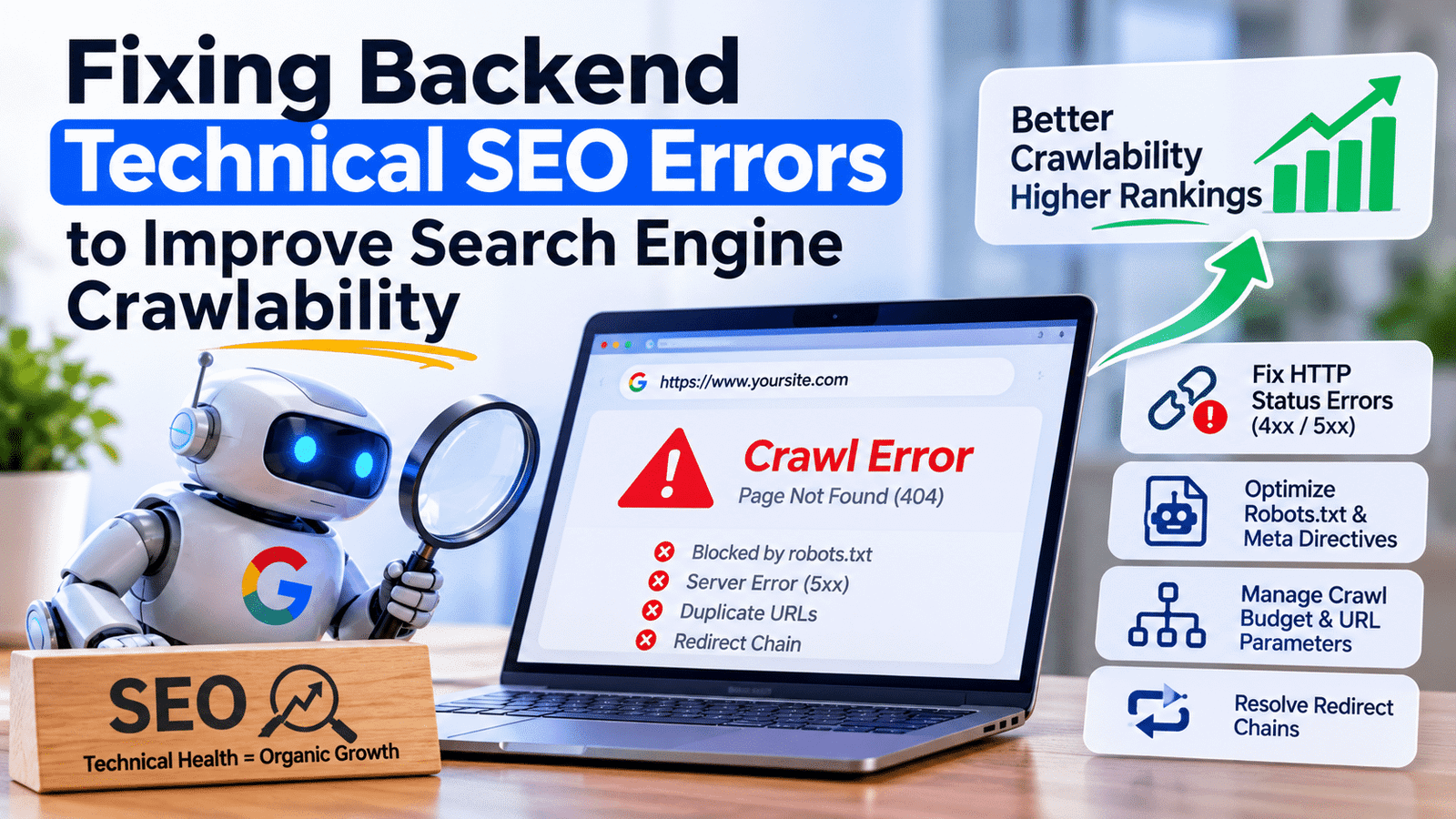
In the competitive digital ecosystem, businesses invest heavily in content creation, keyword research, and backlink acquisition to drive organic growth. Yet, many organizations find their search rankings plateau or plummet despite having stellar content. The hidden culprit behind these underperforming digital assets is almost always technical SEO friction.
While on-page keywords and off-page backlinks attract human visitors, search engine bots—such as Googlebot—rely on clean, unhindered backend architecture to discover, crawl, and index your website. If your technical backend is plagued by crawl errors, broken directives, or bloated response codes, search engine crawlers will abandon your site, rendering your content invisible to potential customers.
At Brancea, we believe that true digital authority begins deep beneath the surface with elite technical infrastructure. In this comprehensive, SEO-friendly guide, we will break down the mechanics of backend technical SEO, explore the most damaging crawlability errors, and reveal how fixing them can unlock your website’s full organic ranking potential.
The Foundation of Search Engine Visibility: Crawlability vs. Indexability
Before diagnosing specific backend errors, it is vital to understand the two-step process search engines use to populate their search results:
-
Crawlability: The ability of a search engine bot to access, read, and navigate through your website’s source code and directory paths.
-
Indexability: The ability of the search engine to process that crawled content, understand its context, and store it securely within its massive database to serve in future search queries.
If a page lacks crawlability, indexability is impossible. No matter how brilliant your keyword strategy is, if Googlebot encounters roadblocks when attempting to crawl your server, your pages will never make it to the search engine results pages (SERPs).
The Anatomy of Backend Crawlability Blockers
Backend technical errors typically originate from server misconfigurations, structural bloat, or improper directive commands. Let’s examine the most common backend errors that sabotage crawlability and how they impact your organic visibility.
                         ┌─────────────────────────────┐
                         │    BACKEND TECHNICAL SEO    │
                         └──────────────┬──────────────┘
                                        │
        ┌───────────────────────────────┼───────────────────────────────┐
        ▼                               ▼                               ▼
┌───────────────┐               ┌───────────────┐               ┌───────────────┐
│     HTTP      │               │     ROBOTS    │               │  CRAWL BUDGET │
│ STATUS ERRORS │               │  .TXT & META  │               │   WASTASGE    │
│ (4xx / 5xx)   │               │ DIRECTIVES    │               │ (Infinite URL)│
└───────────────┘               └───────────────┘               └───────────────┘
1. HTTP Status Code Errors (4xx and 5xx Failures)
HTTP status codes are communication signals sent from your web server to a browser or search engine crawler. When bots encounter broken links or server crashes, these codes signal whether a page is accessible.
-
Client-Side Errors (4xx Status Codes): Errors such as the dreaded 404 Not Found or 410 Gone occur when a URL has been deleted or moved without a proper redirection rule. While occasional 404 errors are normal, chains of broken internal links create “dead ends” for crawlers, wasting valuable crawl budget.
-
Server-Side Errors (5xx Status Codes): Errors such as 500 Internal Server Error, 502 Bad Gateway, or 503 Service Unavailable indicate that your web server failed to fulfill a valid request. If Googlebot hits persistent 50x errors when crawling your site, it will drastically reduce its crawl frequency, assuming your site is unstable or offline.
2. Misconfigured Robots.txt and Meta Directives
The
robots.txt file sits in your root directory and acts as the security guard for your website, dictating which areas search engine bots are allowed to enter.-
Accidental Blocking: A common backend mistake during staging or site redesigns is leaving a disallow directive enabled in the
robots.txtfile (e.g.,Disallow: /). This single line of code blocks search engines from crawling the entire site, causing catastrophic drops in organic traffic overnight. -
Conflicting Noindex Tags: Misusing
noindexmeta robots tags or X-Robots-To headers can accidentally instruct Googlebot to drop important landing pages or commercial category pages from its index.
3. Infinite URL Spaces and Crawl Budget Waste
Crawl budget refers to the finite number of pages Googlebot is willing and able to crawl on your website during a given timeframe. For large enterprise websites, e-commerce platforms, or programmatic content hubs, wasting crawl budget is a fatal error.
-
Parameter Handling and Faceted Navigation: E-commerce sites often generate thousands of duplicate URLs through sorting filters (e.g.,
?color=blue&size=large&sort=price). If left unmanaged, search engines waste valuable crawl budget indexing thousands of duplicate product variations instead of your primary landing pages. -
Session IDs and Tracking Parameters: Unregulated URL parameters created by marketing campaigns can create an infinite loop of unique URLs pointing to identical content, overwhelming bot crawlers.
4. Broken and Inefficient Redirect Chains
Redirects (
301 Moved Permanently or 302 Found) are necessary when moving content to new URLs. However, poor backend management often results in redirect chains (Page A points to Page B, which points to Page C) or redirect loops.-
The Impact on Crawlers: Every redirect requires an additional HTTP request-response cycle. When search engine bots encounter long redirect chains, they often abandon the crawl halfway through, leaving your destination page uncrawled and unindexed. Furthermore, excessive redirect chains dilute PageRank passing equity.
Advanced Strategies for Fixing Backend Technical SEO Errors
Rectifying backend technical SEO errors requires a systematic, engineering-first approach. Here is how advanced technical audits and remediations are executed to restore crawlability:
1. Conducting Comprehensive Technical Site Audits
The remediation process always begins with deep data collection. Utilizing enterprise-grade crawlers (such as Screaming Frog, DeepCrawl, or Sitebulb) alongside Google Search Console (GSC) allows engineers to map the entire site architecture.
-
Analyze GSC Coverage Reports: Review the “Pages” tab in Google Search Console to identify exactly why pages aren’t indexed—whether blocked by robots.txt, marked as 404 errors, or redirected improperly.
-
Inspect Server Log Files: Analyzing raw server log files reveals the exact behavior of search engine bots—showing which pages they crawl most frequently, where they encounter errors, and how much crawl budget is being wasted on low-value URLs.
2. Optimizing the Robots.txt File and XML Sitemaps
-
Clean Up Directives: Audit your
robots.txtfile to ensure critical commercial pages, JavaScript files, and stylesheets are fully accessible to Googlebot. Remove overly aggressive blocking rules. -
Streamline XML Sitemaps: Ensure your XML sitemaps only include clean, canonical URLs returning a 200 OK status. Exclude redirects, broken pages, and
noindexURLs from your sitemap to guide bots directly to valuable content.
3. Resolving Redirect Chains and Implementing Canonicalization
-
Collapse Chains into Direct Redirects: Identify multi-hop redirect chains and update them so that legacy URLs point directly to the final destination URL via a single 301 redirect.
-
Deploy Canonical Tags Properly: Implement self-referencing canonical tags (
rel="canonical") across all primary pages to guide search engines on which version of a URL is the master copy, neutralizing duplicate content issues and preserving link equity.
4. Server-Side Optimization and Response Time Reduction
Backend crawlability is directly tied to server performance. If your server takes too long to respond, crawlers will timeout.
-
Upgrade Hosting Infrastructure: Move away from shared hosting environments prone to latency and invest in robust cloud or dedicated server architecture.
-
Implement Database Indexing: Optimize backend database queries to ensure dynamic pages load and respond to server requests within milliseconds, keeping crawler efficiency high.
Why Technical SEO Requires Ongoing Maintenance
Many businesses treat technical SEO as a one-time project performed during a website redesign. This is a dangerous misconception. As your website grows, developers push new code, marketers launch campaigns, inventory updates dynamically, and third-party plugins are integrated—all of which can inadvertently introduce new backend errors.
Continuous technical monitoring ensures that broken links, server misconfigurations, and indexation blockers are caught and resolved before they impact your search engine rankings and revenue.
How Brancea Builds Digital Authority Through Technical Excellence
At Brancea, we view technical SEO and backend optimization not as ancillary checklist items, but as the foundational architecture of digital authority. We help enterprises eliminate crawl friction, maximize indexation efficiency, and bulletproof their organic search performance.
When you partner with Brancea for technical SEO and QA auditing, our methodology encompasses:
-
Deep Architectural Discovery: We conduct exhaustive server log analyses, GSC diagnostics, and full-site crawls to uncover hidden backend errors, crawl budget bottlenecks, and indexation blockers.
-
Precision Technical Remediation: Our engineering and SEO experts resolve complex 4xx/5xx status errors, streamline redirect chains, fix robots.txt directives, and optimize canonical tags.
-
Performance & Core Web Vitals Integration: We optimize backend server response times and database queries to ensure lightning-fast bot accessibility and user page loads.
-
Scalable Sitemap & Parameter Management: We restructure XML sitemaps and implement clean parameter handling frameworks to protect your crawl budget across massive enterprise or e-commerce architectures.
-
Long-Term Technical Governance: We don’t just fix past errors; Brancea acts as your long-term digital growth partner, providing continuous monitoring and proactive technical governance to safeguard your search rankings.
Conclusion: Unlock Your Full Search Potential
You can have the most compelling content and the most aggressive marketing strategy in your industry, but if search engine bots cannot crawl your backend architecture, your digital presence remains locked behind closed doors.
By identifying and fixing backend technical SEO errors—clearing out crawl blockers, resolving status code failures, optimizing sitemaps, and preserving crawl budget—you open wide the highways of search engine discovery.
Are you ready to eliminate technical friction and transform your website into an unhindered organic powerhouse? Connect with Brancea today to discover how our expert technical SEO audit services can elevate your business growth.